
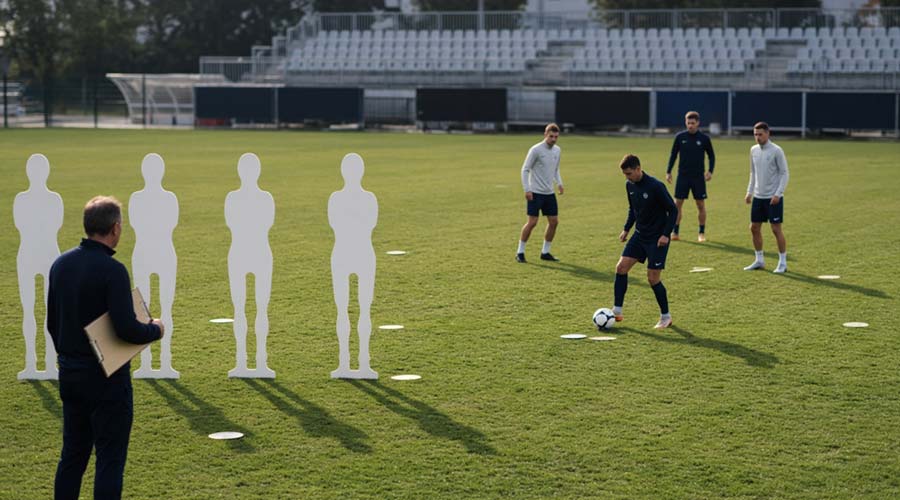
In professional sport, the reliance on one head coach and a few assistants has diminished. Currently, top teams employ specialists for areas as diverse as shooting, kicking, conditioning and recovery, as well as data analysis. With greater competition between teams and the ongoing development of sports science, it is inevitable that the number of specialist coaching staff employed by teams will continue to increase. The graph shows how specialist coaching staff can help analyze and explain match tactics to the average sporting consumer.
The Increasing Importance of Specialist Coaching Staff
Specialist staff members are evident in match statistics, from dead ball goals to penalty saves. Nowadays, many fans pay just as much attention to the appointment of the coaching staff as they do to transfers. Such increased attention may go as far as betting (Farsi: شرط بندی) on corners and goals. Having an experienced set piece coach increases dead ball effectiveness throughout a season, which is reflected in odds of goal scorers and number of goals scored. Thus, proper pre-match analysis needs to analyze the coaching staff, not just the players.
This shows how quickly professional sports have developed in terms of athleticism and strategy. The elite sports squads have analysts, goalkeeping coaches, strength and conditioning coaches, and sports scientists, plus a head coach. Each of these personnel focuses on one small area, reports to the head coach, and helps to strategize. This allows the head coach to focus on other areas like player selection and management. This model can be seen in multiple sports like basketball, baseball, tennis, and of course football.
Skill-Specific Coaching Across Major Sports
Coaching has become more targeted towards goalkeeping, shooting and pitching. Combined with changes in sports coverage, increasingly detailed statistics have been recorded by analysts, journalists, and fans. These stats can even affect player prop markets, as data is available in-play, along with live odds and team news. Players can even refer to the bet application (Farsi: اپلیکیشن بت) for live match data. Live match data means that players can even predict outcomes based on a goalkeeper’s saves or a pitcher’s strikeouts.
There are coaches dedicated to teaching these skills, like positioning and shot-stopping, that aren’t taught in the general coaching sessions. Release mechanics and shot selection are things that a shooting coach teaches, and biomechanics and pitch design to stay healthy are things that a pitching coach teaches. Similar things happen in American Football and Rugby for special teams and kicking. These coaching roles allow for specialists to teach deep, technical skills.
The Support Network Behind Every Athlete
There are also performance specialists, like strength and conditioning staff that develop and manage player durability and training loads. Physiotherapists manage and guide a player’s injury recovery and gradual return to play. Sports psychology coaches help a player manage their focus, and resilience, along with their mental toughness for high-pressure situations. These roles help round out the support a player receives. Below are the most common of these support roles.
- Strength and Conditioning: Durability and Load Management across the squad.
- Physiotherapy: Safe and gradual return to play.
- Sports Psychology: Focus, Mental Toughness and Concentration in high pressure situations.
- Performance analysis: Converts video and tracking data into clear, tactical feedback.
Although not as apparent to the general public, these roles also blend with technical coaching. For instance, a shooting coach collaborates with the strength and conditioning coach on exercises to increase an athlete’s lower-body power and balance. Analysts check if the changes in the athlete’s technique appear in game data. Through collaborative planning, mixed messages to the athlete are avoided, and each specialist is able to make their contribution without wasting training time competing for limited time and space.
Injury management also demonstrates the value of collaborative planning. With an injury to an athlete, the medical staff and the coaches manage the athlete’s training load. Other members of the sports science and support staff also ensure that they are following the same plan to enable the athlete to return to training and fully participate in competitions. Although no method can completely eliminate the risk of an injury occurring to an athlete, structured planning is standard practice across professional sport. Well planned and documented collaborative efforts ensure the whole staff is on the same page and they can learn from each season.
Data, Technology and Real-World Examples
Narrow specialization relies on data. Coaching can be demanding and thankless. Thanks to advances in technology, data is abundant. In football, teamwork and technique are broken down to an atomic level. The action is scrutinized. Coaches set drills to improve weaknesses and to measure the effectiveness of those drills. Data doesn’t replace coaching judgment, rather it gives the coach an edge.
Looking at football for examples of specialization, the 2018 appointment of Thomas Grønnemark as Liverpool’s throw-in coach gained a lot of media attention. In 2021, Arsenal appointed Nicolas Jover as their set-piece coach. Jover became closely tied with the media coverage of the Gunners’ improved corner routines. Specialization in football is inevitable, and results ultimately depend on a combination of tactics, luck, and the players.
Narrow specialization is present in other team sports. In baseball, minor league teams often have both a pitching coach and a hitting coach. Similar to basketball, team sports like baseball also employ skill and shooting coaches. Tennis is an individual sport, yet many players employ teams that include a fitness coach and a physical therapist. Like in other sports, the coach adds value by possessing a high degree of knowledge in a particular area and being consistent with it.
What Specialization Means for Athletes and Clubs
Most feedback athletes find valuable is specific, timely and evidence based. Individual goalkeeping sessions allow the coach to offer feedback to the goalkeeper to develop aspects of footwork that may be difficult to address during a group training session. Younger players benefit from having individual development plans that are tracked and monitored on a yearly or multi year basis. These plans are most effective if the specialist is familiar with the player, the role the player fills within the team and the player’s individual personality. This is particularly true with younger players who may benefit from individualized training plans focused on long term development.
Specialization in coaching has been beneficial to create new career paths in sport. Qualifications offered by sports governing bodies in goalkeeping, as well as in other areas such as strength and conditioning and performance analysis, have set new professional standards in coaching. This has benefitted younger clubs by offering more opportunities for career progression and specialist jobs within the sport.
From a club perspective, while specialization is important, coaching staff numbers quickly increase putting an additional strain on financial and other resources. Successful clubs break the specialization into a few focal areas and centralize responsibility around one individual, while less successful clubs focus on a wider range of areas.
It is good to keep expectations reasonable when considering these coaching roles. Research on individual coaching roles is still limited, and results vary in different sports. A specialist can certainly improve the quality of the work done by the athletes and staff, but cannot guarantee that the athletes will win, or be protected from injuries. Clubs tend to evaluate these hires over a certain period of time, using performance indicators and assessing the feedback of the athletes. Evaluating these roles over the longer term is more valuable than looking for quick results.
Where Specialist Coaching Roles Will Go
It is clear that specialized coaching roles are on the rise in professional sport, and it is unlikely that they will decline anytime soon. Better data, and sports science will continue to be integrated into sport, and competition will remain tight. If coaches integrate these roles in a strategic, considered way, they will gain a competitive edge. Understanding these roles will help sports fans understand what goes into planning routines and understand the work coaches do behind the scenes.